Wednesday, June 10, 2009

Reading Log, March 2009

In March, I had not yet left for the US. All of this reading took place in Poland, including the audiobooks. In fact, I didn't have time to listen to audiobooks while I was in the States.

The House of the Prophet by Louis Auchincloss

This is the 3rd book I've read by this author. I'm definitely an Auchincloss fan (especially since I found out he's related to Edith Wharton), but his books are not light reading--lots to think about and completely character-driven.

Dinner at the Homesick Restaurant by Anne Tyler

Everything I've ever read by Anne Tyler has been top-notch, and this was as well. It the bitter-sweet story of a family muddling along, not always being very nice to each other (to say the least), but never entirely abandoning the family bond, either.

The Appeal by John Grisham

I finally got to read his latest (found it my library of all things--they don't have new books very often). I'd rate this one as just okay--not his best.

The Perfect Spy by John LeCarre

I like spy novels from time to time, but this was less a spy novel than the story of a son suffering from a dysfunctional relationship with his father. I won't be picking up more by LeCarre.

Something New by P.G. Wodehouse--(audio book from Librivox)

This was funny, as most of Wodehouse's books are. I love his understated humor (make that "humour") that just keeps going and going.


The Talented Mr. Ripley
by Patricia Highsmith

This falls into the category of psychological thriller, and I like to read this sort of thing from time to time. This one reminded me a bit of Ira Levin. You see things from the criminal's point of view, but you still don't like him or approve of his actions. There are more books about Ripley, and I'll read them if they fall in my way, but probably won't search them out.

But Inside I'm Screaming by Elizabeth Flock

A woman in mental institution--it's not a pretty scenario, but it was an okay book. It was semi-autobiographical. This is the second book I've read by this author. I'd definitely read another, although I wouldn't call her a favorite. But she does characters well, and if the characters are really well-drawn, I'm hooked.

Those were the books I read in March--seven in all. It's such a tidy, modest number, don't you think? The book gluttony didn't start until April, you see, when I left for the States...

Tuesday, June 09, 2009

Dusting out the cobwebs

I'm a half-hearted blogger at best. I like the idea of blogging more than the actual work of sitting down and writing thoughtful posts every day. Or every week. Or every month, apparently, since my last post was in February. In my last post I was lamenting the cold, the snow, and the dark, short days. Now I'm sitting here with the outside breeze wafting through the open door, the ceiling fan whirring, and sunshine spilling through the window. It will be light past 9:00 pm, and I'll forget to send the kids to bed at anything like a reasonable hour.

Part of my absence from blogdom this time is connected with my absence from home. I spent nearly two months in the United States, and just returned home a couple of days ago, with a "books I've read" list as long as my arm.

I nearly dumped the total list into a reading log for March, April, and May combined, but decided that was ridiculous. Even if anyone cares what I've been reading, they aren't going to slog though a list like that.

The thing about the United States? It's full of books. Book in English. Books at thrift stores. Books at rummage sales, garage sales, and libraries. Books in homes and books in stores. They were unavoidable, and I seemed to have a lot of reading time on my hands.

To say that I indulged in a form of book gluttony rarely encountered would be only to state the inevitable, I think.

Without taking the time to blog, or journal, or contemplate, or even think, much, I simply basked in the opportunity to read pretty much as much as I wanted to. (Did you know that there are places in the US where you can find books for 29 cents? I hope those of you who live there appreciate that fact.) My indulgence took many forms, and if some of the titles on my lists cause anyone to shake a head or laugh out loud, so be it.

Coming soon: Reading Logs for March, April, and May...

Saturday, February 28, 2009

Reading Log, February 2009

Ah, February, how do I love thee? Let me count the ways...

...


Well, that didn't take long. Edwin Teale wrote something along the lines of..."February is at once both the shortest and the longest month." I understand exactly what he means, don't you? Surrounded by February, cold, ice, snow, more cold, more snow, and strings of long, gray days punctuated by still more snow and sub-freezing temperatures, what else is there to do anyway, except huddle indoors and read?

Since I've been blogging and keeping track of what I read, I've noticed that I always seem to get a lot of reading done in February, although most of what I read this month is pretty mundane and forgettable. Kind of like the rest of the month.

So, these are the titles with which I occupied myself during this month (which is, blessedly, over).


The Cloud Atlas by Liam Callanan

I don't have much to say about this. It wasn't the book I thought it was going to be (what are the odds of two authors publishing books called "Cloud Atlas" and "THE Cloud Atlas" in the same year??????) So, I still have to go read the book I originally meant to read, and this one wasn't terrible, but it's hard to judge it fairly when it wasn't what I was expecting.

The Calico Cat by Charles Miner Thompson (Librivox audiobook)

This was strange. The story is well told, but it made me so angry. I was disgusted with one of the characters, and even though all comes right in the end, I would never respect anyone who did what he did. The story is meant to take place in New England, near the Canadian border, so the reader from Athens, Georgia made the whole thing a little weird for me. (No offense to anyone with a Georgia accent, but it doesn't sound like New Englanders.)

The Big Four by Agatha Christie

This was a Hercule Poirot mystery. My girls have suddenly developed a penchant for Christie, so I checked this book out of the library for them. Naturally, I had to read it, too.

Death of a Sinner by Rodney Quest

This British mystery was published in 1971 and in many ways is very dated to that era. It was one of the strangest books I've read in a long time--just weird on so many levels, it's hard to explain. But I'll try...

Why I didn't like this book:

A. Told in first-person narrative by the amateur detective (a rich lawyer), and I really did not like him at all.
B.Unbelievably one-dimensional portrayal of the women in the book.
C. Full transcripts of political interviews, with the exact words of the speaker transcribed like this:

Speaker #1: :::Question asked by speaker:::
Speaker #2: :::Lengthy answer, full of politically and emotionally charged rhetoric:::
(This goes on for pages, and it is completely aside from the story line.)

D. The book is written from an aggressive right-wing perspective. I would consider myself very conservative, but this was offensive and very anti-religious.
E. Incredibly implausible plot/motive for murder that involves Latin. Does it get any weirder?

I won't be reading anything else by this author, and it was about this time that I began to get rather desperate for something excellent.

Corduroy Mansions
by Alexander McCall Smith (Audiobook)

This was a very enjoyable serialized novel and I was sorry to see it come to an end.

Angel of Terror by Edgar Wallace (audio book at Librivox)

This is the sort of story that makes a good audio book--fast-paced, lots of suspense, and a good reader (although some of the accents were off). Rather implausible plot, I think, but fun to listen to just the same.

Mansfield Revisited by Joan Aiken

I love all of Jane Austen's books so much that I frequently read the made-up modern sequels. This was was fairly true to the characters and style of Jane Austen. Lots of Austen-esque moments reminiscent of different Austen books, too. Not Austen, of course. Who is? It was the kind of book that can be started and finished in an evening, which is funny when you consider that Mansfield Park is Austen's longest book.

Crow Lake by Mary Lawson

This was the best book I read all month. I wouldn't be surprised if it turns out to be one of the best for the year. I'd have to read a great many wonderful books to supplant it.


First Meetings (in the Enderverse) by Orson Scott Card
This was a reread when I needed something light.


Police Operation
by H. Beam Piper
(another Librivox audio book)

I wasn't very kind about Death of a Sinner, but I'll try to be nicer about this. I want to damn it with faint praise. How about this? If you don't have anything else at all to do, and you need to kill a couple of hours, listening to this story might be better than listening to nothing at all. Unless, of course, Venusian night-hounds on the loose from an alternate para-time universe have always been your passion.

The House at Riverton by Kate Morton


This book deserves a post of its own, but since I'm doing this one, I haven't yet found the time. It was a very engrossing story, well-paced, and it was a pretty decent finish to the month of February.

I am currently reading six books--one non-fiction historical, one travel memoir, one biography, two novels, and a young adult book in Polish. It feels like a bit too much, but I hope that five of those books will appear on March's list as finished books. (I won't get the Polish one finished.) I finished 11 books in February. I don't really expect to keep up that pace, but in addition to the six I'm currently reading, I have another long-awaited title from Bookmooch that I want to read, and three more on their way to me now...

***

Oh yes, I must report on the progress I've made for my Worthwhile Reading Challenge. I could just say "not much," and that would cover it. I was going to finish The Ascent of Man by Bronowski, but I suspect my bookmark is pretty close to where it was at the end of January. I did read a little further in Szatan z siodmej klasy, my Polish book, but I'm still on chapter one, so it's not what you'd call phenomenal progress, either. I did notice, however, that I was reading a bit more smoothly or fluently, so I seem to be getting the hang of the author's manner of writing. Although written for young people, this is real literature, and it's more challenging to read than a magazine article

Saturday, February 21, 2009

City nature study...

I missed the bus this morning.


I was on my way to the grocery store, and delayed my departure too much, and arrived just too late, so that I had to wait 20 minutes for the next one. The temperatures are below freezing, there is snow and ice on the ground (and the bench at the bus stop), so decided to walk a bit to stay warm.

As I walked along the snow-packed sidewalk, something black floated in front of my face, falling from above. I glanced up and saw a crow sitting on a branch about 20 feet above me. Looking down, I saw that what had fallen was a bit of bark, and the sidewalk was littered with more of it.

While I watched, the crow peeled more bark from a dead branch, pecking at what he found. I suppose there were insects or worms of some kind. I watched him for at least ten minutes, a black bird in a blackened tree, against the stark white sky and whiter snow. A few fellow crows were in trees nearby, engaged in similar winter meal-foraging.

If I hadn't missed the bus, I'd have missed this, and never been the wiser.

I wonder if anyone else, walking in the hard-packed snow, will notice the little pile of bark on the sidewalk? And I wonder if they will wonder how it came to be there?

Friday, February 20, 2009

Crow Lake by Mary Lawson


Now, this was something like!

I've had a run of bad luck with books lately. I've read a lot of second-rate or even revolting books, and there has been such a run of them that I was beginning to get desperate for something really excellent.

And this was it!

This book has all the elements that particularly draw me into a story--excellent characters, a non-linear timeline (the narrator in the present is telling a story that happened in the past, but there is current action as well). As with many of the books that I like, the basic plot could be summarized in two or three sentences. There is a plot, of course, but this is a character-driven story.

The prologue begins
My great-grandmother Morrison fixed a book rest to her spinning wheel so that she could read while she was spinning, or the story goes. And one Saturday evening she became so absorbed in her book that when she looked up, she found that it was half past midnight and she had spun for half an hour on the Sabbath day. Back then, that counted as a major sin.

Great-grandmother Morrison has long since passed away, but her intense passion for knowledge and education is still affecting her descendants. Katie and her brother Matt lay on their stomachs for hours, gazing into the pond, watching the tadpoles, water-bugs, turtles, and other pond life. They dream of studying and learning. Matt has the deep sense of wonder that gives life to such studies, and Katie absorbs his interests and passions, never guessing that they will eventually cause a gulf between her and her brother.

I just loved this story, full of imperfect people making mistakes, taking on life as it comes, making the best of bad situations, keeping promises, and taking care of each other the best that they can.

This was Mary Lawson's first book, published in 2002. I'll definitely be keeping my eyes open for other books she's written.

Wednesday, February 11, 2009

Corduroy Mansions

Alexander McCall Smith, author of a number of popular series (such as the Number 1 Ladies' Detective series), has been writing his "first online novel."

A few months ago, the Telegraph (a UK newspaper) began releasing, online, one new chapter per day. I found the concept intriguing. It reminded me of the way Charles Dickens wrote several of his novels: they were published chapter by chapter in the newspaper. This struck me as being very much the same thing, only for the 21st century. So, I decided to read along (actually, I chose to listen to the audio version, also released day by day), and the book will be finished this week, on Friday, the 13th of February.

As it happens, I have never read anything else by Alexander McCall Smith, but I enjoyed the early chapters enough to keep going. I actually felt that the book mirrored Dickens in a few other ways, as it highlighted current social issues, and presented a range of characters from very different walks of life.

For the past few weeks, I've been a little disturbed because there were loose ends and abandoned plot lines scattered in every direction. A couple of weeks ago, I thought, "How is he going to pull this all together and finish off in just two more weeks." The chapters are short! Now, today I listened to chapter 98 of the 100 planned chapters, and I am in a state of disbelief. However this finishes off, it isn't going to "end" in any way that I recognize as a normal ending. There is simply no possible way to close the gaps, or bring every thread to some kind of reasonable conclusion.

What is this all about? Is this the way Alexander McCall Smith usually ends his books? Or was the chapter-every-day demand too difficult to maintain at the same time as a coherent plot?

Otherwise, I have enjoyed the story. There is a great deal of understated humor, random musings on every subject under the sun, and interesting characters who end up doing outrageous things. Not all of the characters were well-developed, of course. I think some were introduced, but just didn't fit the flow of the story.

The book will be issued in normal book format sometime in 2009, and I don't know how much longer it will be available online. If you're interested, take a look soon.


****************

Well, I have now finished the book, and no, it certainly did not end in a neat and tidy way. Alexander McCall Smith agrees,and has basically indicated his intentions of calling these first 100 chapters "Volume 1," and continuing the story.

I'm not entirely sure Corduroy Mansions, as it is, is really a novel at all. But it is fun, and if you don't mind never finding out exactly what happened when Hugh was kidnapped in Columbia or how the book Autobiography of a Yeti is received when (if?) it is published, jump right in and enjoy the ride.

Sunday, February 08, 2009

Smoke and Mirrors

I really like to read lit blogs. (This surprises no one, I am sure.)

When I read a review...or two...or three...about a book that sounds like something I'd like to read, too, I do one of several things. Sometimes I write the author and title on a piece of paper and try to remember to take the piece of paper to the library, if I think the foreign-language library might have it. I don't always remember the bits of paper, but the act of writing makes it more likely that I'll remember to check.

That's not really the most likely source for me to find a specific title, however--especially if the book is more recently published. The bulk of their collection was acquired from the 1960's to the 1980's, and the rest of the collection comes from random donations, not purchased titles.

Therefore, if I really want get hold of a book, I am more likely to put it on my wish list at Amazon or www.bookmooch.com . If I want it so immediately that I'm willing to pay a premium price, I may look for it at www.empik.com and purchase it here in Poland. That doesn't happen often. I'm usually willing to wait.


*************

Some time ago, in accordance with the habits described above, I read a review for a book entitled Cloud Atlas that sounded like something I might enjoy. I no longer remember who wrote the reviews that piqued my interest, or even how many reviews I might have read, but I added the book to my Bookmooch wishlist.

Not so very long ago, I received an email from Bookmooch letting me know that someone had the book available, and I requested and received it. I've added quite a few books to my "to be read" stack recently, so it was probably here for a few weeks before I picked it up and started reading it.

What I remember about Cloud Atlas was that is was a series of short stories that were connected; that the stories took place across a long span of time, and that it was somewhat post-Apocalyptic in nature.

I read the first few chapters...and the next few...and kept wondering when the story would move onto the future.

*************

What are the odds, do you suppose, of two authors writing a book entitled Cloud Atlas? And publishing them in the same year?

Because the book I meant to read was Cloud Atlas by David Mitchell, and the book I did read was The Cloud Atlas
by Liam Callanan.

They are not the same books. Isn't that strange? Is "cloud atlas" some kind of catch-phrase that means something and I've simply never heard of it? Or did these two authors come up with the same unusual title for their books, which coincidentally were both published in 2004?

*************

I've updated my Bookmooch wishlist with the Cloud Atlas I originally wanted to read, and will continue to wait for it.

Maybe after I've had a little time to think about it, I'll write a proper post about The Cloud Atlas (you see there is a subtle difference?) and let you know what I thought of it. I did finish reading the book, so you know that's one point in its favor.

Has anyone read either of these two titles? What did you think?

Saturday, February 07, 2009

Beloved by Toni Morrison

Toni Morrison won the Pulitzer Prize for fiction for this book, in 1988.

I got married in 1988 and had other things to think about.

I've bumped into Toni Morrison's name and books before, but have to confess that I really didn't know anything about her work, and this is the first of her books that I have read.

Beloved takes place in post-Civil War Ohio, close to the Kentucky border. There was a population of freed/former slaves in the area even before the war. In fact, some of the white neighbors were involved in rescue and escape efforts, as well as giving assistance in the form of housing and jobs to former slaves who were beginning their lives anew.

I honestly didn't know what I was getting into when I started this book. It includes the details of some of the physical atrocities committed by slave owners, but its larger scope is the psychological effect on men and women in slavery. In the main thread of the story, the Civil War is over and slavery has been abolished. None of the characters are currently slaves, and some of them (the children of former slaves) never have been. Nevertheless, the children of former slaves are still deeply affected by the psychological impact of slavery on their parents. It reminded me of the stories I've read of the children of Holocaust survivors. Their parents' experiences also left a mark on them.

The history and experience of slavery itself is conjured up only in memory, and many of its victims are long since dead, but their stories play a part in Beloved as well. How do young men and women, who have never known any life but slavery, who were not raised by their parents, who are kept ignorant of even rudimentary knowledge--how do they cope, mentally and psychologically, with life as they know it? And if they achieve freedom, how do they put their experience--the only experience they have--behind them and move forward?

The three main characters are Sethe (a former slave) and her daughter Denver (born during her escape), as well as Paul D., another former slave from the same household as Sethe. Although many years have gone by since slavery was a part of their daily existence, it still has a hold on their minds and hearts. I never felt that sanity was a close acquaintence of any of them.

They are all haunted by the "ghosts" of the past--memories too powerful and too terrible to leave them in peace.
"Sethe," he says, "me and you, we got more yesterday than anybody. We need some kind of tomorrow."

I won't forget this book in a hurry. It is less the story of human courage in the face of adversity than it is the story of human frailty in the midst of adversity. Just being willing to face tomorrow is sometimes all there is, and it has to be enough.

Saturday, January 31, 2009

Reading Log, January 2009

As the month draws to a close, I realize that I have been confined to the house for nearly three solid weeks. I've either been sick, as has my entire family, plus there was that little episode with the hospital. All things have conspired together to give me many "leisure" hours for reading, while at the same time leaving me mentally unfit for anything more intellectually challenging than L.M. Montgomery.


House of Mirth by Edith Wharton--I listened to the audio version at Librivox.org, except for the last five chapters, which I read. I've already written about this book, but this was my third Wharton novel and it prompted me to accquire her biography, which I plan to read sometime this year.

Patricia Brent, Spinster by Herbert Jenkins--Another audio book! This was written in 1918, but you'd never know it. Patricia, a "spinster" of 24 (this was 1918!) works in London and lives in a boarding house. When she overhears a few other boarders pitying her because she doesn't have anyone to "take her out," she invents a fiance, and announces her plans to go out with him for dinner. Berating herself all the while, she dresses up and calculates how much her "date" is going to cost her. Then she arrives at the restaurant and discovers that a few of her fellow-boarders just "happen" to be dining there as well.

To avoid having her deception revealed, she approaches a man sitting alone at a table, and begs him to "play along," which he does, very gamely. But one thing leads to another, and before long, Patricia's engagement has been announced in the paper, her employer's family are ingratiating themselves with her, and her fellow-boarders are making a greater nuisance of themselves than ever.

This was very funny, and felt like a much more modern novel than its age would indicate. It really would make a very funny romantic comedy film.

I Am The Clay by Chaim Potok--Not my favorite Potok so far.

Santa Claus’s Partner by Thomas Nelson Page--Audio book,at Librivox, of course. I meant to listen to this during the holidays, and didn't get around to it, so I picked it when I finished the Patricia Brent book because it was short. It was a fairly predictable Christmas Carol knock-off (minus the ghosts), but it was okay.

When in Rome by Ngaio Marsh--This is a mystery from the golden era of mystery writers. I've only started reading Ngaio Marsh in the last year or two. I think this is the first one I've read that *didn't* have a theater setting. Instead, it takes place in Rome (as the title implies), with a lot of architecture and historical "atmosphere." To be honest, it was only so-so. A lot of what I read and listened to this month was fairly mediocre, and I am ready for something great.

The Vanishing Act of Esme Lennox by Maggie O'Farrell--Probably the newest title I read this month. There were quite a few interesting themes in this story, but I found both Esme's circumstances and the ending of the book very disturbing.

The Blue Bedroom by Rosamunde Pilcher --This was a collection of Pilcher's short stories. I've read some of her longer books before, and I adore her character-driven novels that show love and grace in action. These shorter stories, mostly about families, were not too bad, although I like her longer fiction better.

The Witness for the Prosecution (and other stories) by Agatha Christie--another short story collection, and some of Christie's most chilling and gruesome stories, I might add.

Maus by Art Spiegelman--a graphic novel, about the author's father's experiences in Nazi-occupied Poland. His family was Jewish, and he and his wife survived Auschwitz, although most of the rest of their family, including a pre-school aged son, did not. This was the first graphic novel I've read, and I don't think I'll be a regular reader of this kind of book, but I will try to find and read the sequel to this.

The Grey Woman by Elizabeth Cleghorn Gaskell--This was another audio book. I've only been reading Gaskell for a couple of years--North and South, Wives and Daughters, and Cranford so far. This short novella (which I listened to at Librivox) was a bit of a shock. I even thought for a while they might have listed the author incorrectly and it was really Ann Radcliffe, author of The Mysteries of Udolpho. This is a "Bluebeard" story in which in a young girl marries a mysterious foreigner, and is taken to live in his remote castle, where she discovers to her horror that he has secrets she never dreamed of.

A War of Gifts by Orson Scott Card--I am an unabashed fan of Card's Enderverse books, but I'm sorry to say, this one was a disappointment. It's a Christmas story of sorts, that takes place at the Battle School during Ender's training there. It would have been better if Card had told his story and left Ender out of it, because I couldn't reconcile Ender as he appeared here with the Ender we know from Ender's Game. My recommendation: read Ender's Game and all its marvelous sequels...except this one.

The Lair of the White Worm by Bram Stoker--I listened to this as an audio book, and only finished it for the same reason you watch a bad movie to the end--just because you have to see if the whole thing is really as bad as it seems, and because some things are just so bad they are almost funny. If I make a "worst books of 2009" list at the end of the year, this book will be on it.

Beloved by Toni Morrison--I just finished this and am still mulling it over. I hope to do a better review this week, and I'll link it here if I do.

That makes a total of thirteen books in January, and nary a one of them nonfiction. I am ashamed of myself, but plead mental fog brought on by a child's accident, my own fever and relentless cough, quite a few sleepless nights, and just plain weariness of soul. I hope to do better in Feburary.

As part of my monthly reading log, I plan to include what progress I'm making in my Worthwhile Reading Challenge. I've already confessed the titles I completed this month, but before the month fell apart, I did get about 1/4 of the way through Bronowski's The Ascent of Man, and in spite of a change of heart on my part about whether or not this is worthwhile reading, I hope to finish it in February.

I also started reading Szatan z siodmej klasy and have decided that, intended for young people or not, this is a hard book for me. I'm up to page 9. Don't laugh. Here's my rough translation of one sentence: "A flock of mustangs on the prairie never neighed with joy at the site of water like the seventh grade neighed aloud with humor." Of course, they're not neighing--just laughing. But I don't know the verb "neigh" anyway. I don't like reading with a dictionary at my elbow, so I just soldier on and hope for the best. If I'm going to finish this book, it is going to have to be by reading just one or two pages per day on a consistent basis.

So, now I'm ready for February.

Friday, January 30, 2009

Maus

I read my first graphic novel!

Ever since I heard of Art Spielgelman's Maus, I have been intrigued by the concept of telling the story of the holocaust in the form of a graphic novel, casting the Jews as mice, the Germans as cats, and the Poles as...pigs. (I don't think that was intended to be entirely insulting. It could just be because Poles eat a lot of pork, and didn't eat kosher.)

All of the events in the story took place fairly close to where I live, and I wonder how readers fare who aren't sure how Sosnowiec and Czestochowa should be pronounced?

The story itself is such a common one (if you have read much holocaust literature), that it would almost seem stale if it were not so horribly true. Six million Jews...possibly two million Poles...and every one of them with an individual story that could break your heart. But the details are so familiar...I think Art Spiegelman drew his story in a fresh way in part to give it a new impact.

I'm going to be perfectly honest and admit that the pictures didn't "make" the story for me. Maybe I don't know how to read comics, or graphic novels. I found myself reading the words, and glossing over the pictures.

Maus tells more than the story of how Mr. Spiegelman's parent's managed to survive in Poland from 1941 to 1944, when they were betrayed and sent to Auschwitz. It also portrays the way in which the experience continued to affect them to the end of their lives, and how it affected their relationship with their son born after the war. This aspect of the story lends depth and perspective to the tale, and it was that part of the story that made the strongest impression on me. I also enjoyed the fact that Vladek Spiegelman tells his story in somewhat broken English. It sounded very authentic.

If I have the chance, I will read the sequel (Maus II) to this story, but otherwise, I think my first graphic novel will probably be my last. I prefer words...

Saturday, January 24, 2009

Reeled in by another list!

Has anyone else been watching the "1,000 novels you must read" lists that The Guardian (a UK newspaper) has been publishing? They have divided their books into seven rather odd categories:

Comedy, Crime, Family and Self, Love, Science Fiction and Fantasy, State of the Nation, and finally, War and Travel.

Their placing of various books into the different categories seems a bit strange at times, and I am not the only one who thinks so. However, the irresistible lure of the list compelled me to read through all the lists, and tally up where I stand.

Before I reveal those numbers, however, I wanted to weigh in with my feelings about lists like this. I consider them a sort of measuring stick against which I don't mind measuring my reading, simply because it says something about my reading list in comparison with what others think are worthwhile books. However, I am rather amazed at the audacity of a list 1,000 books long. Let's say you average reading one book per week (and some of the choices on this list could scarcely be finished in a week), so about 50 books per year. That's a low number for some, but far above the average. At that rate, it would take 20 years to read through all the books on that list as it stands.

Twenty years of compulsory reading, without any room for newly-published works of fiction unless you read MORE than one book per week. Twenty years without time to delve into the complete oeuvre of authors like Jostein Gaarder (an author who didn't make the list) or John Grisham (who did), just because you especially enjoy them. Twenty years with no room in the schedule for those delicious rereads of old favorites. Twenty years, by the way, of novels alone, with no time for non-fiction, biographies, poetry, short-stories, or how-to books. Twenty years of assigned reading, even if you hate the book?

I don't think so. In fact, I would boldly make the claim that none of the Guardian staff, nor any of the contributors to this list, have read all the books on it. I'd almost bet money that none of them have read half.

So where did I stand? I'm giving myself credit for 110, since one of the books is a current read and I'm over halfway through. I have read 11% of the list. Rather than the total number, I was more interested to see how my reading broke down by category. I was pleased to learn that I have read books from all seven categories, with the highest number falling (to my very great surprise) in the Science Fiction and Fantasy category (26 books) and the lowest in Comedy (only 6). Please don't tell my family these statistics--they already think I have no sense of humor. (And the Guardian's idea of Comedy is a little strange, anyway.) I've read 20 of the books on the Crime list, and the rest of the categories fell somewhere in the middle, between 12-18 books each.

Also interesting for me was keeping track of the books on the list that are already on my radar and on my (not at all offical) "to be read" list. I had at least one or two books from each category (even Comedy!) that I hope to read in the not-to-distant future. I feel so well balanced.

But this is the best part--and the reason I enjoy lists like this, and don't really care how long they make them (since I feel no guilt over the 89% I haven't read, and probably never will)--I discovered several intriguing new books that I want to read, and either added them to my online wishlist or downloaded the free etext or bookmarked the online audiobook. THAT'S what lists like this are good for.

If you've looked over the list and gleaned some good titles, or criticized their choices, or questioned the categories, or counted how many you've read, please leave a comment or link. I'd like to hear!

Friday, January 23, 2009

A peek at what socialized medicine (sometimes) looks like

Almost two weeks ago, 4yo C. had a nasty fall and cut her ear quite badly. As soon I started cleaning up the blood, I knew it needed stitches. We ended up waiting nearly five hours in the emergency room of the only hospital in this city of one million people that will give a child stitches. That is pretty much par for the course everywhere, I know.

A week later, we went back to the same hospital to have the stitches removed. Remembering our emergency-room wait, for which I was ill-prepared, I loaded up with toys and amusements before we headed out. The surgical clinic area, where we had to go, was swamped. There were at least 20 children there, with one or more adults in tow. Toddlers wailed, babies fussed, and parents sat with the resigned expressions on their faces that we recognized so well. Might as well make ourselves comfortable, right?

Krakovian took C.'s papers to the registration desk, and after waiting a while there, the clerk took the papers and handed them right back. You see, we didn't have insurance (translation: we were not enrolled in the Polish National Healthcare System). Therefore, we had to pay for the service first. Krakovian went off to the cashier to pay, while C. and I settled in. (She had a nasty stomach flu three days after our last hospital visit, and I wasn't keen for her to get too close to anyone.)

And then, lo and behold, a surprise. Krakovian returned with his "paid in full" receipt, and the same clerk who had dismissed him 15 minutes before, sent him straight back to the nurse, who led us straight to the doctor (past a dozen waiting parents or more), who had the six stitches removed and sent us on our way in less than the same 15 minutes. I didn't attempt to catch the glances of any of the waiting parents, still seated on benches and in the hallway. I didn't want to see their resigned expressions transform themselves into disgruntled resentment at the fact that, arriving later, we were taken care of before them.

We don't actually KNOW that paying for service sent us to the front of the line, but it is difficult to account for it otherwise. Does anyone think nationalized health care would look much different in the United States? Hoards of people would sign up. Hoards of people would line up for the (far too few) doctors the program pays for. And then hoards of people would wait, and wait, and wait for their turn. Unless they could pay up front and be seen sooner. I've no doubt the system would still work better for those who have the money to pay.

And for the record, it cost about $20 to have the stitches removed. I suspect that getting the front-of-the-line attention in the US would cost a lot, lot more.

And C.'s ear is healing nicely, praise the Lord!

Thursday, January 22, 2009

The Vanishing Act of Esme Lennox by Maggie O'Farrell

This is a very visual book. The author evokes a series of fragmented images or pictures that remind me of an image as it would appear in a broken mirror. There are sharp, clear portions, but the complete image is difficult to see or bring into focus. You have to put some distance between the images and yourself before the fragments merge into a coherent image.

Consider the opening few sentences:
Let us begin with two girls at a dance.

They are at the edge of the room. One sits on a chair, opening and shutting a dance-card with gloved fingers. The other stand beside her, watching the dance unfold: the circling couples, the clasped hands, the drumming shoes, the whirling skirts, the bounce of the floor.

A similar picture is evoked in the last few pages of the story: "Two women in a room. One seated, one standing."

And in the meantime, more than sixty years have elapsed.

The two girls/women are Kitty and Esme, sisters. They were young women in Scotland in the 1930's,and sixty years later, Kitty is a grandmother with an Alzheimer-clouded memory. Her granddaughter Iris is stunned to receive a letter from a mental institution, explaining that her relative (one Euphemia Esme Lennox) is going to be released. Iris's father is dead and her grandmother is in no condition to explain to her who this person is, and why she has never heard of her before. In fact, she was certain that her grandmother, like her father and herself, was an only child...

But there is Esme, child-like and solid, and Iris cannot abandon her to the fate of a dilapidating system of care.

The action of the story takes place across just two or three days, as Iris discovers Esme's existence and brings her home for the weekend. However, the story spans more than sixty years, and is told in images and fragments from Esme's point of view, from Iris's, and from Kitty's broken and unsettled point of view.

Here is one bit from Esme's childhood memories. As I read through this, I was forcefully aware that a great deal of time was passing and that the child was clearly unsupervised. It definitely created the sense, by the end, that something was wrong, and indeed something was.
In the parlour, Esme wound the gramophone, stroked the velvet curtains, rearranged the chain of ivory elephants on the windowsill. She opened her mother's workbox and examined the threads of coloured silk. She rolled back the carpet and spent a long time sliding in her stockinged feet. She discovered that she could slide all the way from the claw-footed chest to the drinks cabinet. She unlocked the glass bookcase and took down the leather-bound volumes, sniffed them, felt their gold-edged pages. She opened the piano and performed glorious glissandos up and down the keys. In her parents' bedroom, she sifted through her mothers' jewellery, eased the lid off a box of powder and dabbed some on her cheeks. Her features, when she looked up into the oval mirror, were still freckled, her hair still wild. Esme turned away.

Esme was an intelligent, introspective girl--too independent to be satisfied with learning how to behave properly,and unwilling to accept that marriage was her only future. She was different, and in the end, her difference set her up for her fate: life in a mental institution.

It's hard to imagine any parents being able to lock a child away like that. Regardless of the culture and the times, I just cannot understand that. It was Esme's mother, I think, who was mentally disturbed, possibly because she had lost several babies. Her character isn't clearly seen, but I think there must have been something wrong with her if she could say of Esme, "we won't speak of her anymore..." and erase a daughter from her life entirely.

This is also Iris's story, although I don't think her part of the story was quite fleshed out as well as Esme's. I was left wishing there were one or two more chapters...

Labels:

Sunday, January 18, 2009

Mooch-a-Ventures

A few months ago, before Christmas, I decided to use some of my points at Bookmooch to find a few titles that would make good Christmas presents for the kids. I have a wishlist, but nothing I want ever seems to be available, so I thought it would be a way to use up the points. At the time, I had about 24 points, which meant I could request twelve whole books!

I did find a few books that the kids wanted, and requested them. And then a strange thing started to happen. Either I found more books that I wanted to request, or books that I already wanted became available, and the next thing I knew, I was mooching book after book. "Wonderful!" I thought, "Now I'll have a chance to use up those points, and I'll have some great books to read,too."


Meanwhile, other people must have had the same idea, because I sent books from my inventory to Finland and New Zealand, and probably some other places, and now, in addition to the stack above, which does not include the books I mooched for my kids or Ian McEwan's Atonement which is still en route to me, I have 33 points, and can ask for sixteen more books.

What a great system.

In case you can't see them well, this is what I'll be reading:

Housekeeping by Marilynne Robinson

The Cloud Atlas by Liam Callanan

The Vanishing Act of Esme Lennox by Maggie O'Farrell

Things Fall Apart by Chinua Achebe

and, last but not least,

When in Rome by Ngaio Marsh

That last has a sad story attached to it. I checked that title out of the library here in Krakow before Christmas, and I--(this is so terrible)--lost the book. I was reading in a restaurant, and then later, I couldn't find my book. I returned to the restaurant, and they didn't have it, so it was just...gone. I was busy with the holidays and let my other book run overdue because I dreaded going back to the library to tell them about it, but in the meantime, I also located and mooched a copy from Bookmooch.

When I finally went to the library to pay my fines and explain the situation, they were very gracious, and will accept this book in place of the one I lost, in spite of the fact that (gulp) I lost a hardcover and this is an ex-library softcover.

I'm going to read it first, though, and that's why it is on top of the stack!

But only after I pack up the books I have to mail to Australia.

Wednesday, January 14, 2009

The work of her fingers...

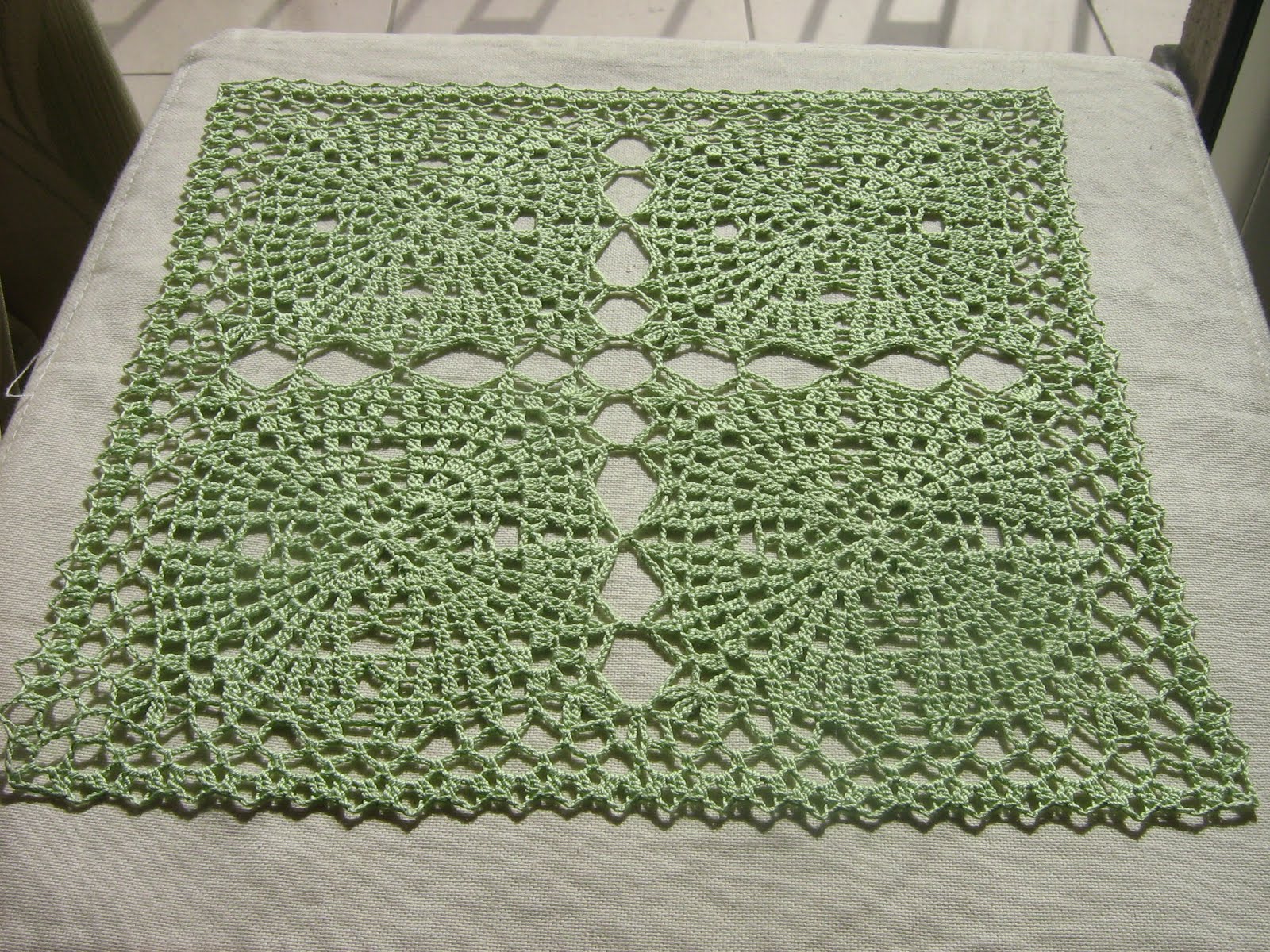
Just in case anyone is wondering what I do while listening to audio books...

IMG_2434IMG_2127IMG_2303IMG_2299IMG_2493IMG_2592IMG_2470IMG_2585IMG_2948

I guess it more or less speaks for itself. Only two of these are still in my possession. One is mine because I made it for me, and...well, there probably aren't many people who want an olive green doily. The other one will find a good home sooner or later.

This is my way of making the world a little bit prettier...

I Am The Clay by Chaim Potok

I have read several books by Chaim Potok--The Chosen, In The Beginning and My Name is Asher Lev. They were all excellent books and have firmly established Potok on my list of Authors I Think Are Worth Reading.

I have to establish that first, before I say that this book didn't live up to the others I've read. Chaim Potok is Jewish, and the other books I've read are set in the American Jewish community. When he writes, his characters are excellent, but they are also set in relief against the Jewish background, and the effect is very authentic.

The story in I Am The Clay is set in Korea (where Potok served as a chaplain during the Koren War), and the characters are Korean. An older man and wife are fleeing, with thousands of others, from the on-coming Chinese army. Along the way, the woman rescues an injured, orphaned boy. Her husband begrudges the effort and food required for his care, but as they live and work and travel and suffer and grieve together, the bonds of family are forged.

However, Potok really doesn't know the Korean culture from the inside in the same way that he knows Jewish culture, and so the effect is rather flat. This book didn't have the same depth, the same rich, authentic flavor that his Jewish-related books did. I noticed from the first chapters that the writing seemed different--sparser and plainer than I remember Potok being, with far less attention to the details. He also used a technique that I found a little odd. That is, he told the thought processes of various characters in one flowing paragraph, with nothing to mark the switch from one to another.

Mountain air affects the eyes, Uncle said, and the heart and lungs, you see the whole world in a different way. And now so we found the boy and came all this way only to die here in these mountains what kind of spirits are you to do such a thing to an old woman there is no strength left in me even for anger but if there were how I would hate you. And if I had not run away if I had stayed maybe someone would have been alive and and I could have lived with them but no one was alive and Badooki had also run away and and I would have died in those flames everything was burning the house the air the bodies and and and look all the stars everywhere stars the ice on the mountains reflecting the stars in the sky and in the snow stars and stars.

Stream-of-consciousness is always a little difficult to read, but in that paragraph, you are dipping into three different streams.

I'm a little disappointed that what may be the only Potok novel I'll read this year wasn't one of his best, but that won't stop me from reading more of his work in the future. Toward the end of the book, the boy meets a Jewish chaplain, and I suspect that is Potok's cameo appearance in his own novel. I actually think that if he had written this book differently--if he had written about the Korean refugees as an outsider looking on, instead of trying to write as if from the inside, it would have been a better story.